OPINION REPORT 4:
The Ebb of Traffic, Driven by Value: How High-Quality Collaborations Fuel Sustainable Brand Growth?
In the 2024 Fashion Exchange’s Global Fashion IP Ranking – FASHION IP 100, French designer brand LEMAIRE claimed the top spot for the first time, while streetwear giant Supreme fell out of the top three, with Off-White, Fear of God, and other hype-driven brands dropping out of the top ten entirely. Concurrently, celebrity-led fashion IPs saw their collective influence decline in 2024, with only 15 making the list—a historic low, down by seven compared to the previous year. Behind this reshuffling lies a profound consumer revolution: a shift from "symbolic consumption" to "value resonance," signaling the end of the "traffic-driven" era and the full arrival of the "content-driven" age. This transformation reflects consumers’ rigorous scrutiny of brands’ storytelling capabilities. As strategies reliant on logo-stamped collaborations and celebrity endorsements lose efficacy, brands committed to cultural depth and long-term narratives are quietly rising. A new paradigm of "brand soul" narrative economics is rewriting industry rules.
The Collapse of Traffic Bubbles: The Decline of Hype Premiums and Celebrity Glamour
• The Crumbling of Capital Trust and the Hollowing of Star Power
In July 2024, Supreme was sold by parent company VF Group to EssilorLuxottica for $1.5 billion—a fraction of its peak valuation. By October, LVMH had divested Off-White, founded by the late Virgil Abloh, and in November, Italian streetwear conglomerate NGG (owner of Palm Angels and Ambush) filed for bankruptcy protection. These events mark a collapse in investor confidence toward "fast-fashion business models." The golden age of streetwear is unraveling as capital retreats. Celebrity-led brands face similar decline. Many rely on "same-item hype" to monetize fans but lack cultural roots or product innovation. For example, a top singer’s streetwear label, criticized for prioritizing social media buzz over quality, was branded "cash-grabbing" by consumers—a stark reminder that hype ≠ brand longevity.
• The Rise of "High-Value Perception"
The deeper driver lies in consumers’ "value awakening" amid economic uncertainty. A decade of repetitive streetwear "god-making," fueled by scarcity tactics, has left Gen Z jaded. Social media’s "demystification pool" compresses brand narratives into three-minute explainers, reducing consumer engagement to superficial questions: Is it cool? Is it worth it? Drop the link! While hyped products achieve short-term gains, they flatten cultural value, stifle design innovation, and erode brand equity. According to NielsenIQ’s 2024 Gen Z Consumption Report, younger consumers increasingly seek emotional connections and spiritual fulfillment beyond virtual interactions. For Gen Z, "value" transcends price—it hinges on a product’s ability to deliver "high-value perception."
• Formulaic Tactics Meet Value-Conscious Consumers
When Virgil Abloh launched Off-White™ in 2013, he infused streetwear with philosophical depth through "rhetoric and references." Today, however, many brands fail to innovate or protect their heritage. As logos are slapped onto everything from T-shirts to thermoses, their symbolic power dilutes into assembly-line labels. A viral Xiaohongshu comment captures the sentiment: "Buying streetwear feels pointless—at least Uniqlo doesn’t pretend to have a soul." Research shows Gen Z’s interest in "hype items" has dropped by 60%, with searches shifting toward "classic staples" and "seasonless styling." As consumers reject algorithmic manipulation and demand authentic value alignment, the market is returning to its essence: only brands that reject shortcuts and invest in cultural depth will endure as true "icons of their time."
The Triumph of Content-Driven Brands: The Power of Cultural Legacy and Narrative
• CLOT: Building a Chinese Streetwear System Through Cultural Belonging
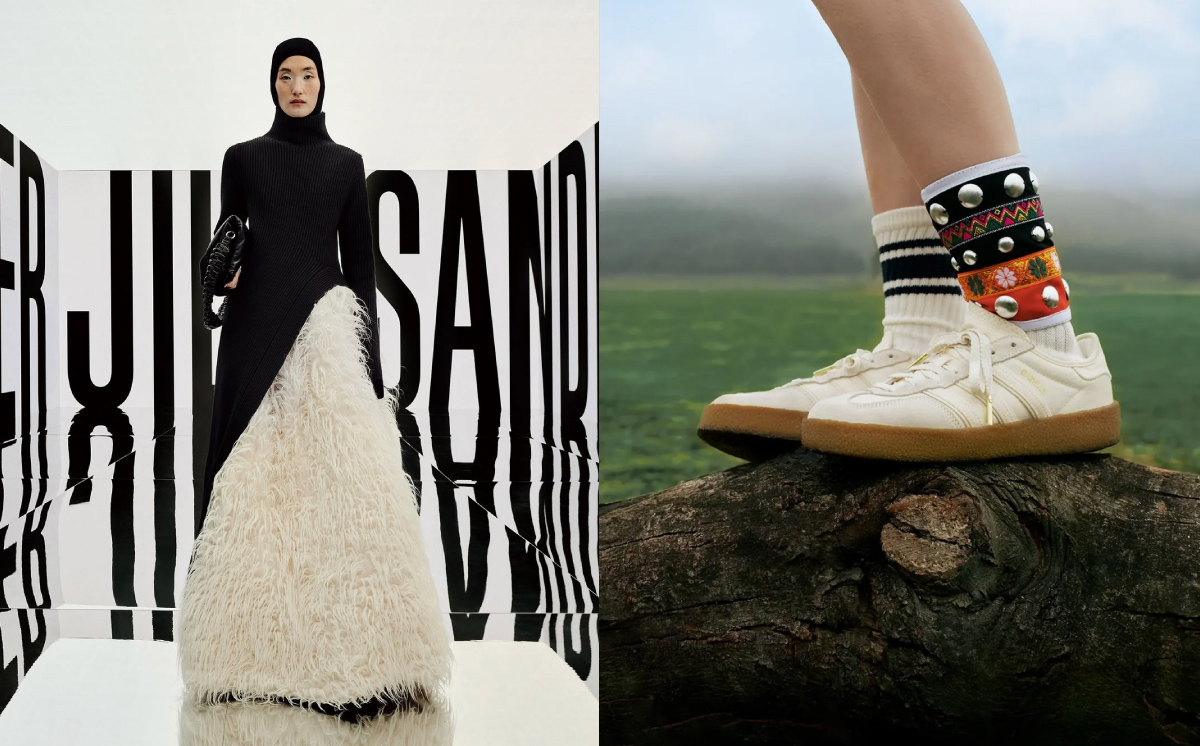
In 2024, Edison Chen’s CLOT became China’s top fashion IP in the FASHION IP 100 ranking, extending its six-year reign as the country’s leading designer brand. Since its 2003 launch, CLOT has evolved from a niche rebel to a cultural ambassador. Its success stems not from collaboration volume but from each partnership serving as a bridge for East-West dialogue—often selling out instantly. Landmark projects include the 2006 Nike "Death Kiss" (featuring acupuncture motifs), the 2015 "Silk Series" (blending Eastern silk with Western leather), and the 2025 adidas Originals "Silk Collection" (showcasing Yunnan ethnic patterns).
Over two decades, CLOT has redefined "Chinese streetwear": early collaborations with Hiroshi Fujiwara established its aesthetic; the "Terracotta Army Series" transformed historical symbols into consumer icons; recent woven designs and ethnic motifs expanded its cultural narrative. Even as resale markets distort its streetwear ethos, CLOT doubles down on sophistication—its 2025 "New Tradition" collection merges modern tailoring with Eastern motifs. CLOT’s journey proves that true longevity lies not in chasing trends but in creating a cultural language. While others chase traffic, CLOT spent 20 years teaching the world to listen.
• Moncler: Crafting a Unified Narrative Through Pluralistic Co-Creation
From ski specialist to luxury powerhouse, Moncler’s transformation began with its 2018 Genius Project—a collaborative platform uniting Hiroshi Fujiwara, Craig Green, Rick Owens, and others under "One House, Different Voices." Monthly capsule collections, released via "drop culture," sustain scarcity-driven demand. The 2024 Shanghai Fashion Week "City of Genius" spectacle—featuring 10 designers in a 30,000-square-meter shipyard—drew 67 million online views. Moncler’s genius lies in balancing creative freedom with brand cohesion: each designer’s work aligns with its "avant-garde luxury" DNA, whether through Fujiwara’s street edge, Simone Rocha’s romantic femininity, or Jil Sander’s minimalist functionality.
Backed by Italy’s manufacturing rigor, social media hype, and immersive events, the Genius Project propelled Moncler’s sales past €1 billion and redefined its identity—from "fashion-forward outdoor brand" to "luxury empire with pluralistic voices." As competitors scramble for visibility, Moncler proves that true luxury lets creativity flourish without losing its soul.

• adidas: Revival Through Heritage, Cultural Co-Creation, and Authentic Storytelling
After the YEEZY fallout and Nike’s market dominance, adidas staged a comeback via a triple strategy: heritage revival, cultural partnerships, and genuine narratives. In 2024, global revenue rose 12% to €23.68 billion, with Greater China driving seven consecutive quarters of "quality growth." Iconic products like the Samba shoe (now a €1.5 billion streetwear staple) and collaborations with Wales Bonner (reggae culture) and CLOT ("Silk Series") transformed collabs from marketing tools into "cultural equity." Morgan Stanley notes that Nike’s collaborative lines yield 32% higher margins than standard products.
In China, adidas localized fiercely: the 2024 "Run to Paris" campaign—documenting a 75-year-old recovered patient and female runners crossing Eurasia—generated 308,000 Douyin likes and 100,000 Bilibili views. Partnerships with Gen Z idols like Yuqi Song, marathon sponsorships, and the "You Got This" campaign (showcasing 52 athlete stories) shifted sports narratives from "winning" to "life empowerment." As CEO Bjørn Gulden states, "Marketing is 50% emotion, 50% logic"—adidas now thrives by anchoring itself in 75 years of heritage, cultural resonance, and product excellence.
Building Brand Equity Through High-Quality Collaborations
• Miu Miu x New Balance with Coco Gauff: From Individual Stories to Lifestyle Integration
Miu Miu’s collaboration with tennis star Coco Gauff and New Balance transcended logo-stacking. By embedding itself in sports scenario—from Wimbledon whites to post-match leisurewear—the brand merged luxury and utility. Gauff’s TikTok authenticity (800K followers), social advocacy, and long-term New Balance ties (e.g., her CG signature line) turned products into self-expression tools. Handwritten signatures, tailored cuts, and tech fabrics amplified individuality.
Strategically, Miu Miu tapped into female sports narratives: leveraging Gauff’s Black identity and Gen Z appeal, it boosted U.S. sales by 93.2% in 2024. The lesson? Future competition hinges not on hype but on rooting products in real-life contexts where users co-author the story.
• Our Legacy × Stüssy: A Cultural Experiment in Waste Rebirth
Since 2016, Our Legacy and Stüssy have exchanged deadstock denim and wool for eight seasons. Stüssy’s ‘90s deadstock denim fabric became minimalist shirts; Our Legacy’s scraps morphed into streetwear hoodies. This "waste swap" blended Nordic minimalism with street grit, resonating deeply in Asia. A Zigzag-print jeans look, dubbed "Best of Fashion Week" by GQ, sold out instantly at €400. Beyond sales, the collab elevated Our Legacy from "Scandinavian niche" to Asian wardrobe staple—a narrative that reportedly attracted LVMH’s investment interest.
• Acne Studios × Frédéric Malle: Stepping Beyond Comfort Zones
In 2024, Acne Studios CEO Mattias Magnusson declared the brand was "leaving its comfort zone," launching its first major product extension: a fragrance with Editions de Parfums Frédéric Malle. This move aligns with Acne’s €500 million revenue target and global retail expansion (80 stores by 2025). Past collaborations—like the Moomin series (celebrating Nordic roots) and Kappa’s Y2K revival—highlight its collaboration daring. As Magnusson notes, Acne’s DNA lies in "multidisciplinary creativity"—a trait now extending to scent.
Why Sustainable Worldbuilding Is Non-Negotiable
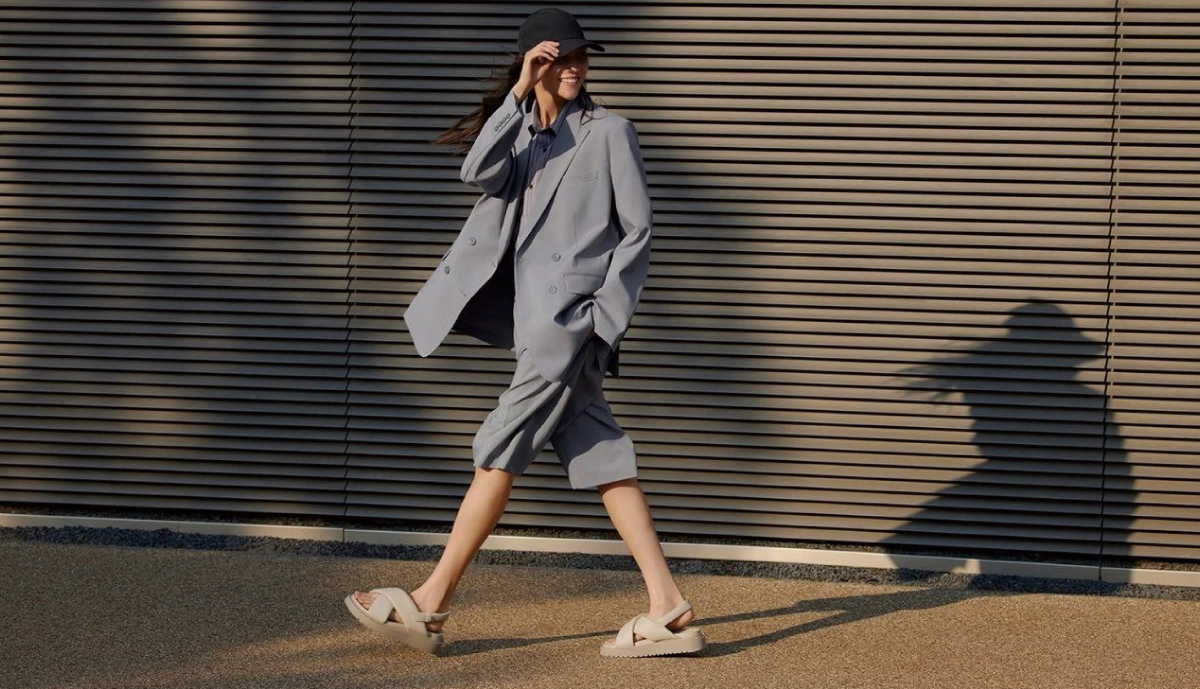
In 2024, UNIQLO took a bold step: appointing Clare Waight Keller as creative director to lead its UNIQLO:C and LifeWear lines. Her promotion from collaborator to visionary signals a shift from "collaborative hype" to "value-driven governance." Keller’s haute couture background (ex-Givenchy) merges sporty chic with unisex cuts, democratizing sustainable design. On Xiaohongshu, #UniqloCSeries garnered 40 million views and 80K discussions.
UNIQLO’s partnerships—like those with Jil Sander and Christophe Lemaire—prioritize substance over star power. As creative president John C. Jay states: "We don’t hire designers for their 20 million followers—that’s not the world we want." Through its LifeWear magazine and city documentaries, UNIQLO crafts a narrative universe centered on "LifeWear." Founder Tadashi Yanai’s philosophy—"Fashion’s purpose is to let people enjoy the essence of dressing"—has driven 40 years of innovation (Heatech, Ultra Light Down) and storytelling. For UNIQLO, sustainable worldbuilding isn’t optional—it’s survival.
.jpg)
Epilogue: In Narrative Lies Eternity—The Ultimate Answer to Brand Value
As hype fades and traffic bubbles burst, only brands that cultivate cultural narratives and worldviews will endure. UNIQLO’s Takafumi Kinoshita observes: "Consumers don’t always know what they want—it’s our job to help them discover true passion." From CLOT’s cultural translation to Moncler’s pluralistic genius, adidas’ heritage revival to UNIQLO’s "LifeWear," these brands prove that creativity isn’t about fantasy—it’s about decoding markets, cultures, and lifestyles.
In the algorithm age, data predicts trends but cannot build value. What people crave is meaning validated by time, not fleeting hype. The future belongs to brands that anchor themselves in narrative, navigate with heritage, and plant seeds of significance in consumers’ hearts. For those willing to trade speed for depth, the best era for brand storytelling is just beginning.
Why Sustainable Worldbuilding Is Non-Negotiable
In 2024, UNIQLO took a bold step: appointing Clare Waight Keller as creative director to lead its UNIQLO:C and LifeWear lines. Her promotion from collaborator to visionary signals a shift from "collaborative hype" to "value-driven governance." Keller’s haute couture background (ex-Givenchy) merges sporty chic with unisex cuts, democratizing sustainable design. On Xiaohongshu, #UniqloCSeries garnered 40 million views and 80K discussions.
UNIQLO’s partnerships—like those with Jil Sander and Christophe Lemaire—prioritize substance over star power. As creative president John C. Jay states: "We don’t hire designers for their 20 million followers—that’s not the world we want." Through its LifeWear magazine and city documentaries, UNIQLO crafts a narrative universe centered on "LifeWear." Founder Tadashi Yanai’s philosophy—"Fashion’s purpose is to let people enjoy the essence of dressing"—has driven 40 years of innovation (Heatech, Ultra Light Down) and storytelling. For UNIQLO, sustainable worldbuilding isn’t optional—it’s survival.
Epilogue: In Narrative Lies Eternity—The Ultimate Answer to Brand Value
As hype fades and traffic bubbles burst, only brands that cultivate cultural narratives and worldviews will endure. UNIQLO’s Takafumi Kinoshita observes: "Consumers don’t always know what they want—it’s our job to help them discover true passion." From CLOT’s cultural translation to Moncler’s pluralistic genius, adidas’ heritage revival to UNIQLO’s "LifeWear," these brands prove that creativity isn’t about fantasy—it’s about decoding markets, cultures, and lifestyles.
In the algorithm age, data predicts trends but cannot build value. What people crave is meaning validated by time, not fleeting hype. The future belongs to brands that anchor themselves in narrative, navigate with heritage, and plant seeds of significance in consumers’ hearts. For those willing to trade speed for depth, the best era for brand storytelling is just beginning.
复制成功!